

We’ve all been there. The deadlines are piling up, your inbox is overflowing, and your mind is racing at 100 miles per hour. In these moments, the advice to “just do a 45-minute meditation” or “take a weekend retreat” can feel less like help and more like another chore on your to-do list.
But what if the secret to calmness wasn’t a massive time commitment, but a series of “micropractices”—tiny, 30-second habits that fit into the cracks of your day?
A recent report from BBC Future highlights the growing body of evidence suggesting that short, simple activities can significantly improve our mood, wellbeing, and energy. These aren’t just quick fixes; they are scientifically proven techniques to reset your nervous system.
Here are four 30-second habits from the article that you can start using right now to feel calmer and more centered.
1. Laughter Yoga: Fake It ‘Til You Make It
It sounds strange, but the evidence is compelling. Laughter yoga isn’t about waiting for something funny to happen; it’s about initiating laughter for the health benefits.
The Science: A large meta-analysis found that non-humorous laughter is about twice as effective as humor-related laughter at reducing depression and anxiety. The body doesn’t distinguish between a real giggle and a fake one—the physiological benefits are the same.
How to do it:
- Take three deep breaths, placing your hands on your belly.
- Start fake laughing. If that feels awkward, simply say, “hi hi hi, ha ha ha” and gradually increase the volume.
- Often, the fake laugh turns into a real one.
- End with a deep breath and think about one thing you are grateful for.
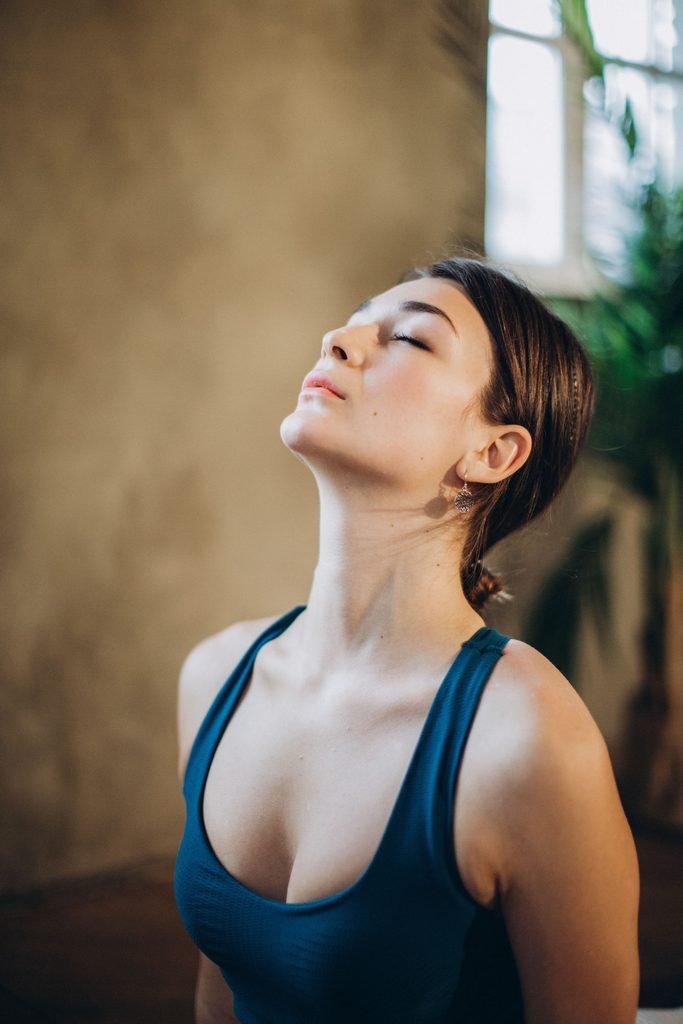
2. Micro Yoga: The 15-Second Reset
If you spend hours hunched over a computer screen, this is for you. “Micro yoga” is a mindful stretch that takes less time than sending a text message.
The Science: Research shows that taking just 15 to 30 seconds to stretch every 15 minutes can improve productivity by about 15%. When paired with deep breaths, it helps reduce burnout and psychological distress.
How to do it:
- Interlace your fingers behind your back.
- As you inhale, extend your arms downwards and gently lift your chest.
- As you exhale, soften into the stretch.
- Hold for two to three slow breaths.
3. Slow Breaths: The Nervous System Switch
When you are stressed, your body enters “fight or flight” mode. To calm down, you need to activate your parasympathetic nervous system—the “rest and digest” state.
The Science: Taking slow, deep breaths activates the parasympathetic nervous system. One recent study found that taking just three slow deep breaths boosted alpha waves in the brain, which are associated with calm and focused attention.
How to do it:
- Sit comfortably and close your eyes.
- Take three slow, deep breaths, lasting about 10 seconds each.
- Crucial step: Make your exhale longer than your inhale.
- Focus on the sensation of the air entering and leaving your lungs.
4. Self-Compassionate Touch: The 20-Second Stress Reliever
We often underestimate the power of touch, but you don’t need a partner to reap the rewards. You can soothe yourself.
The Science: A study led by researcher Eli Susman found that placing your hands over your heart and belly while thinking kind thoughts for just 20 seconds significantly lowered cortisol levels (the stress hormone) compared to a control group.
How to do it:
- Place one or both hands gently over your chest or upper arms.
- Take a breath and focus on the warmth and gentle pressure of your hands.
- Direct kind thoughts toward yourself. (e.g., “I am doing the best I can right now.”)
The GyanDaily Takeaway
As Natalie Van der Wal, a researcher at Delft University of Technology, advises: “Try them out and see what fits.”
There is no need to try all four at once. The dose you need might be different from someone else. The goal is to incorporate these mindful breaks into your everyday activities.
Whether it’s a fake laugh in the car or a deep breath before a meeting, these 30-second habits prove that you don’t need hours of silence to find your calm—you just need half a minute.
Which of these habits will you try today? Let us know in the comments below!