

On August 2, 2027, the Moon will block out the Sun for 6 minutes and 23 seconds at its peak. That is the longest total solar eclipse on land anyone will see until the year 2114. Astronomers are already calling it the “eclipse of the century,” and eclipse chasers around the world are planning trips years in advance. Here is what makes this eclipse special, where it will actually be visible, and whether India gets a view of it.
The total solar eclipse on August 2, 2027, will be visible along a narrow path through Spain, Gibraltar, North Africa, Saudi Arabia, Yemen, and parts of the Horn of Africa. Totality lasts longest near Luxor in Egypt, at 6 minutes 23 seconds. India does not fall in the path of totality and will not see this eclipse.
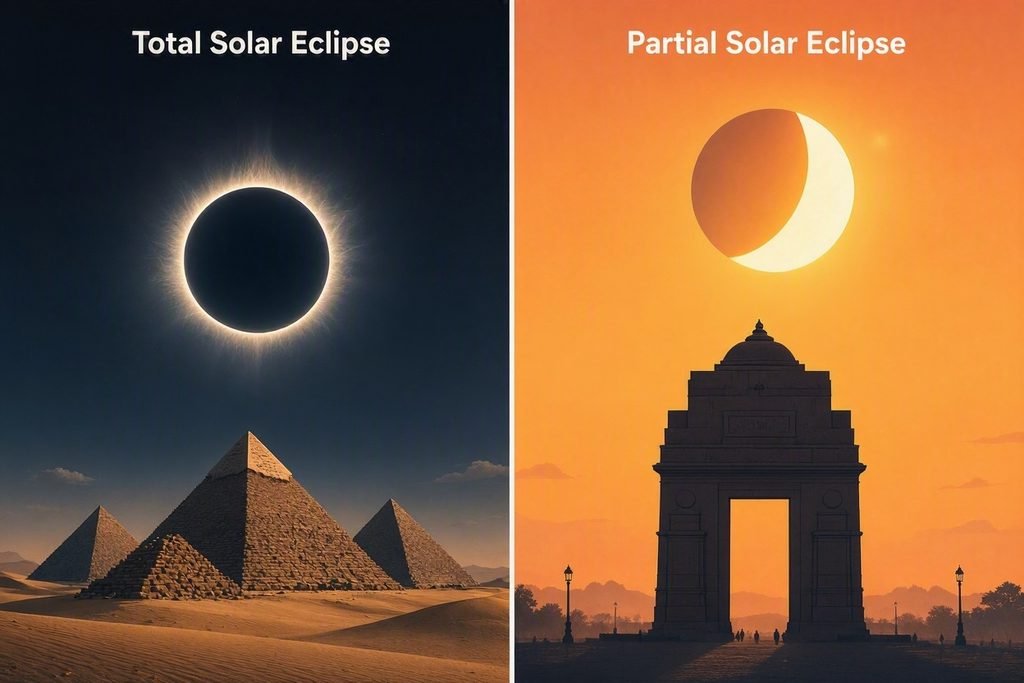
Why This Eclipse Is Called the Eclipse of the Century
A total solar eclipse happens when the Moon passes directly between the Sun and Earth, blocking the Sun’s light completely for a few minutes. Most total eclipses last only two to three minutes at any single spot. This one is different because the Moon will be closer to Earth than usual during the event, which makes its shadow wider and the eclipse last much longer.
The path of totality this time stretches about 250 kilometers wide and runs across nearly 15,000 kilometers of the Earth’s surface, from the North Atlantic Ocean all the way to the Indian Ocean. That combination of a wide, long path and a summer timing gives skywatchers an unusually strong shot at clear weather too.
The Path of Totality: Where It Actually Passes
The shadow first touches land in Morocco, then sweeps through Spain and the tiny territory of Gibraltar within seconds of each other. From there, it crosses North Africa through Algeria, Tunisia, and Libya before reaching Egypt, where the eclipse hits its longest duration. After Egypt, the path moves over the Red Sea into Saudi Arabia and Yemen, before fading out over the Indian Ocean.
Here is how the timing breaks down at some of the best-known points along the path.
| Location | Approx. Totality Duration | Notes |
|---|---|---|
| Gibraltar / Southern Spain | About 4 minutes 39 seconds | Easiest for European travellers, shorter totality |
| Tangier, Morocco | Around 4-5 minutes | Coastal viewing, strong winds |
| Luxor, Egypt | 6 minutes 23 seconds | Longest totality, well-built tourist infrastructure |
| Jeddah, Saudi Arabia | Close to 6 minutes | Very low average cloud cover in August |
Luxor sits near the exact centerline of the path and gets close to the maximum possible duration anywhere on Earth. It also already has an airport and hotels built for large numbers of visitors, which is a big reason eclipse tour groups have targeted the city for years. Cairo, despite being Egypt’s most visited city, does not fall inside the path at all, so travellers heading there specifically for the eclipse need to plan the trip south to Luxor.
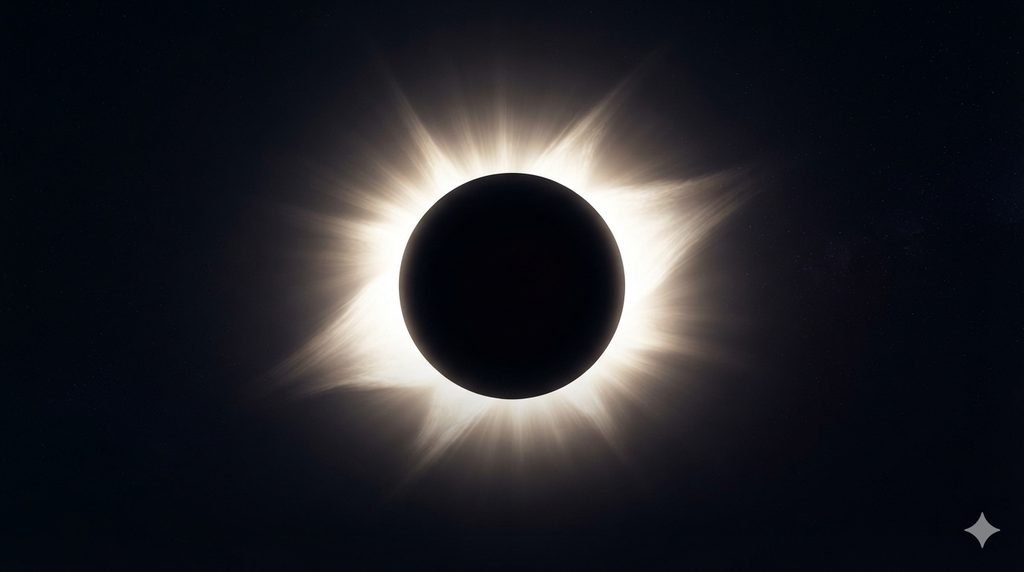
Can India See the 2027 Total Solar Eclipse?
No. India sits well outside the path of totality, which runs through Spain, North Africa, Saudi Arabia, and Yemen before disappearing over the Indian Ocean. Indian skywatchers will not see even a partial eclipse from anywhere in the country on August 2, 2027.
For Indian eclipse enthusiasts who want to witness totality in person, the nearest and most practical options are Saudi Arabia and Egypt, both of which sit on established international flight routes from major Indian cities. Egypt’s Luxor offers the longest totality along with tourist-ready infrastructure, while Jeddah in Saudi Arabia offers nearly as much totality with a lower chance of cloud cover.
When Will India See Its Next Total Solar Eclipse?
India last saw a total solar eclipse cross parts of the country in 2009, visible from the northeastern states. Total solar eclipses over any single location are rare because the path of totality only ever covers a small strip of the Earth at a time, so most places wait decades between direct views. Indian skywatchers keen on totality generally need to travel abroad, just as they will need to for the 2027 event.
How to Watch Safely, Wherever You Are
Even from outside the path of totality, a solar eclipse should never be viewed with the naked eye. A few basic rules apply everywhere:
- Use certified eclipse glasses or a solar filter rated for direct sun viewing, not regular sunglasses.
- Never look at the Sun through a camera, telescope, or binoculars without a proper solar filter attached.
- If you are travelling to the path of totality, glasses come off only during the brief seconds of full totality, when the Sun’s disk is completely covered.
- Book accommodation and flights early if you plan to travel, since hotels near prime viewing spots like Luxor are already filling up years ahead of the date.
FAQ
Q1: When is the 2027 total solar eclipse?
The eclipse takes place on August 2, 2027, with maximum totality of 6 minutes 23 seconds near Luxor, Egypt.
Q2: Why is the August 2027 eclipse called the eclipse of the century?
Because it offers the longest total solar eclipse duration on land until the year 2114, thanks to the Moon being closer to Earth than usual during the event.
Q3: Which countries fall in the path of totality?
The path crosses Spain, Gibraltar, Morocco, Algeria, Tunisia, Libya, Egypt, Sudan, Saudi Arabia, Yemen, and parts of the Horn of Africa before ending over the Indian Ocean.
Q4: Will India see the 2027 solar eclipse?
No. India lies completely outside the path of totality and will not see even a partial eclipse from this event.
Q5: What is the best place to view the 2027 eclipse?
Luxor, Egypt, offers the longest totality at 6 minutes 23 seconds along with strong tourist infrastructure, making it one of the top choices among eclipse chasers.