

Three decades ago, Gurgaon was mostly farmland on the edge of Delhi. Today it holds over 250 Fortune 500 offices, glass towers, and some of India’s priciest homes.
The next decade brings a bigger shift. The Gurugram Master Plan, new metro and rail projects, and a wave of Global Capability Centers are pushing the city from a scattered corporate hub into a connected, tech-driven metro region.
If you are planning to invest, buy a home, or just track where Gurgaon is headed, here is a full breakdown of what changes by 2036.
Quick Snapshot: Gurgaon Today vs. 2036
| Pillar | Gurgaon Today | Gurgaon in 2036 |
|---|---|---|
| Transit backbone | Yellow Line Metro, Rapid Metro, road network | 28.5 km Central Metro Loop plus high-speed RRTS to Delhi and Alwar |
| Tech focus | IT services, BPOs, SaaS startups | AI research labs, Global Capability Centers, green data centers |
| Real estate hotspots | Golf Course Road, DLF Phase 5 | Dwarka Expressway, New Gurgaon (Sector 81-95), Sohna Road corridor |
| Mobility | Mostly private petrol and diesel cars | Large electric bus fleet, automated pod taxis, connected EV grid |
| Average property price | Rs 12,000-18,000 per sq. ft. | Projected Rs 28,000-45,000+ per sq. ft. on Tier-1 corridors |
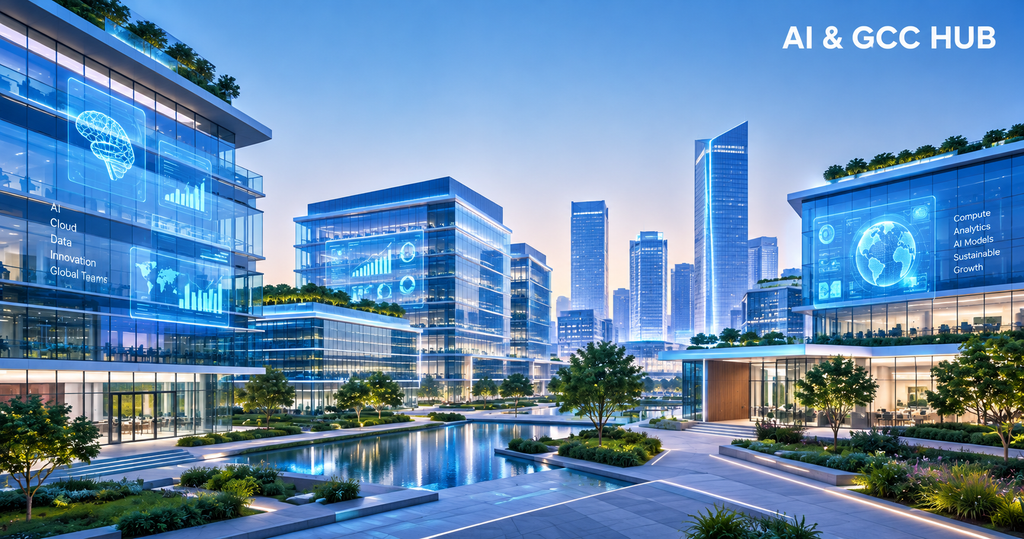
The Tech Shift: From Back-Office Work to AI and Innovation Hubs
Gurgaon’s economy is moving away from software support and outsourcing. The city is heading toward deep tech, automated infrastructure, and corporate decision-making centers.
The rough timeline looks like this: BPOs and call centers defined the 1990s and 2000s. Fintech, SaaS, and shared services took over through the 2010s and 2020s. AI hubs, sovereign data centers, and GCC clusters are set to define the 2030s.
Global Capability Centers Keep Growing
India already hosts more than half of all Global Capability Centers set up worldwide. Gurgaon captures the largest share of high-value tech operations among Indian cities.
By 2036, routine back-office tasks will run almost entirely on automation. Commercial hubs like Cyber City, Udyog Vihar, and upcoming corridors along CPR and SPR will house global headquarters focused on:
- Generative AI engineering and quantum computing research
- Algorithmic risk and quantitative finance centers
- Global supply chain command centers
Data Centers Expand Along the Outskirts
Cloud computing demand and data localization rules are pushing large-scale data centers toward Sohna and Manesar. These hubs are being built with independent solar power and smart microgrids attached.
Smart City Operations Get a Central Brain
The Gurugram Metropolitan Development Authority runs an Integrated Command and Control Centre that is set to expand sharply over the next decade.
Two changes stand out. Traffic signals at major junctions like IFFCO Chowk and Rajiv Chowk will adjust in real time based on live camera feeds. Sewer and drainage sensors will track water levels automatically, cutting down monsoon flooding risk.
Infrastructure Megaprojects Reshape How the City Moves
For years, Gurgaon’s private condominiums sat next to patchy municipal roads and drains. The next decade focuses on closing that gap.
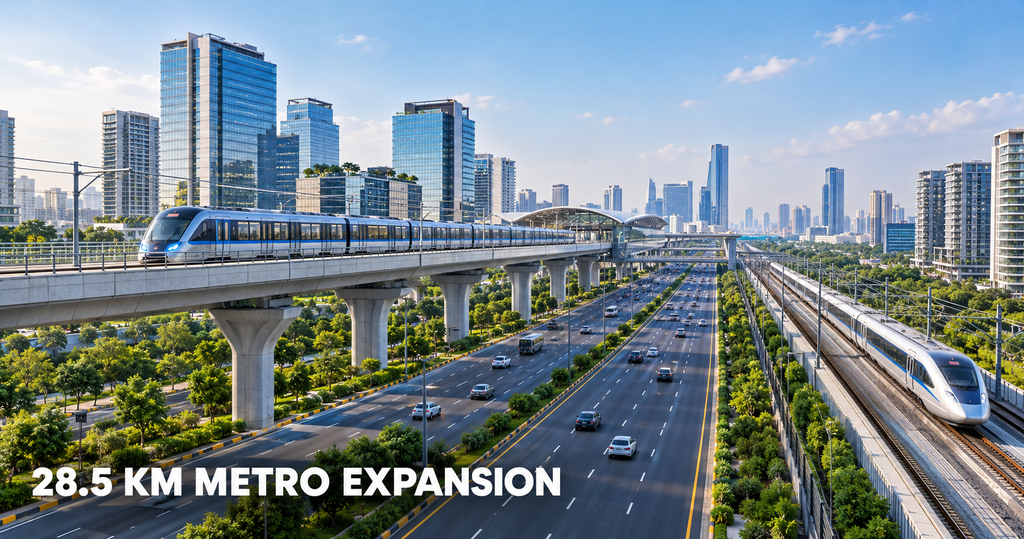
A 28.5 km Metro Extension
A Rs 5,450 crore metro expansion will finally connect Old and New Gurgaon. The line runs from Huda City Centre through Subhash Chowk, Hero Honda Chowk, Sector 10, and Palam Vihar, linking back to Cyber Hub.
By 2036, this loop connects with a proposed spur to the Dwarka Expressway and Delhi’s Blue Line, making travel across the city possible without touching the main highways.
The Delhi-Gurgaon-SNB RRTS
This high-speed rail corridor runs at speeds up to 160 km/h. Once fully operational, commute time from Delhi’s Sarai Kale Khan to Gurgaon drops to under 25 minutes. The line also links Rajiv Chowk and Kherki Daula to the industrial belts of Manesar, Bawal, and Neemrana.
Dwarka Expressway and the CPR-SPR Corridor
The 8-lane Dwarka Expressway, now fully operational, connects with the Central Peripheral Road and Southern Peripheral Road to form a second major artery through the city.
By 2036, this belt fills up with commercial parks, retail high streets, and sports complexes, shifting the city’s center of activity westward.
Fixing the Monsoon Flooding Problem
Gurgaon’s yearly monsoon gridlock, often called Gurujam, is pushing the city toward bigger drainage fixes. Plans include reviving the Badshahpur and Najafgarh drain networks with dedicated stormwater channels, along with mandatory rainwater harvesting and recharge wells for gated communities.
Where Will Property Prices Stand in 2036?
Gurgaon real estate has moved from speculative plots to an asset class dominated by major developers like DLF, Godrej, Oberoi, Sobha, and M3M. Corporate demand, NRI buyers, and limited land in prime sectors are driving steady price growth.
| Micro-Market | Price Today (2025-26) | Projected Price (2036) | Key Driver |
|---|---|---|---|
| Golf Course Road (DLF Phase 5) | Rs 40,000-70,000+ | Rs 90,000-1,50,000+ | Extreme scarcity, top address for executives and high-net-worth buyers |
| Golf Course Ext. Road / SPR | Rs 16,000-26,000 | Rs 38,000-55,000 | Proximity to Cyber City 2.0 and premium retail hubs |
| Dwarka Expressway (Sec 102-113) | Rs 14,000-22,000 | Rs 32,000-48,000 | Close to IGI Airport, Diplomatic Enclave II, and Yashobhoomi |
| New Gurgaon (Sectors 81-95) | Rs 8,500-13,500 | Rs 20,000-28,000 | Family-focused hub with direct highway access |
| Sohna (South of Gurgaon) | Rs 7,000-10,500 | Rs 16,000-22,000 | Elevated corridor, schools, affordable and mid-luxury supply |
These projections assume a 7-9% annual growth rate, in line with inflation and the pace of infrastructure completion.
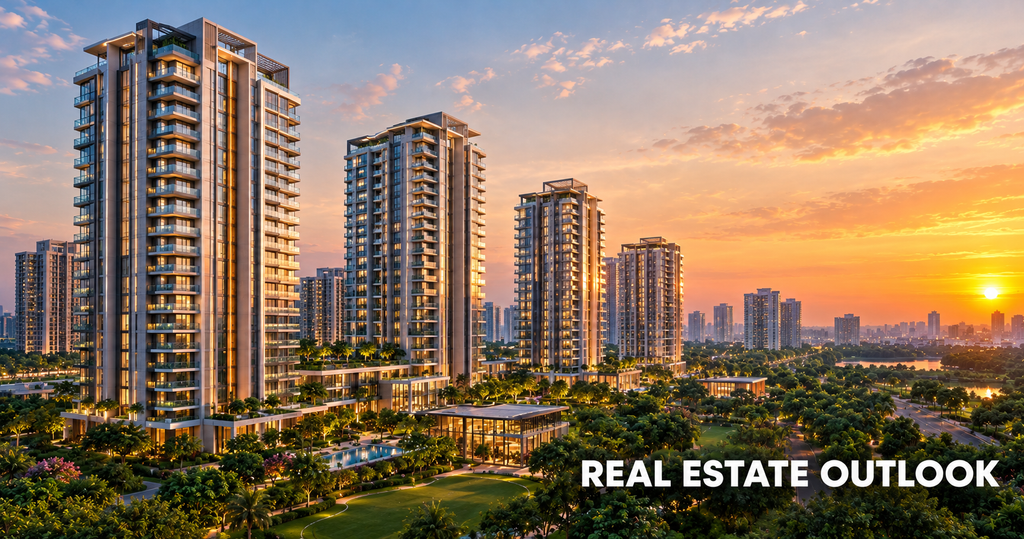
New Housing Formats on the Way
Three formats are likely to define new supply over the next decade.
High-rises of 40 to 60 floors with co-working spaces, large sports facilities, EV charging bays, and rooftop wellness areas are already coming up. Senior living communities with built-in healthcare are emerging along Sohna Road and near the Aravalis, as Gurgaon’s early corporate workforce approaches retirement. Net-zero homes with solar panels and greywater recycling are moving from a luxury add-on to a standard requirement, as green building rules tighten.
Three Problems Gurgaon Still Needs to Fix
Growth here depends on how the city handles a few long-standing issues.
Groundwater levels are falling fast. The city needs tertiary water treatment pipelines and full recycling of treated sewage for construction and cooling use.
Winter air quality stays poor. Fixing this needs regional coordination, a shift to electric and CNG public transport, and protecting the Aravali green buffer.
Civic infrastructure remains uneven. Modern gated societies often sit right next to urbanized villages with far weaker sanitation and safety infrastructure. Closing this gap matters for the city as a whole, not just for premium pockets.
Should You Invest in Gurgaon Now?
Gurgaon is on track to become a dense, well-connected corporate and residential hub, often compared to Singapore’s growth model.
For buyers and investors, a few things stand out. Corridors tied to upcoming metro lines and expressway completions, including Dwarka Expressway, CPR-SPR, and Golf Course Extension Road, offer the strongest mix of price growth and rental demand. As public transit expands, daily reliance on private cars for office commutes should steadily fall, making day-to-day life easier across the city.
The next ten years will decide whether Gurgaon stays a cluster of private towers or becomes a fully connected, well-planned metro region. Current infrastructure and investment trends point toward the latter.
FAQ
Q: Will Dwarka Expressway real estate keep appreciating by 2036?
Yes. As offices, schools, and hospitals along the corridor become fully functional, the area is expected to shift from an emerging market to an established residential district, supporting continued price growth.
Q: What happens to Old Gurgaon by 2036?
Old Gurgaon should see major renewal driven by the new 28.5 km metro extension, along with commercial redevelopment and better road connections linking it to New Gurgaon.
Q: How much will the metro extension affect property rates?
Properties within 1-2 km of planned stations like Subhash Chowk, Sector 10, and Palam Vihar typically see a 15-25% premium in rental yields and sell faster on resale.
Q: Which area suits a 10-year investment horizon?
Golf Course Extension Road and CPR fit high-budget luxury buyers. Dwarka Expressway (Sectors 102-113) and the Sohna corridor offer stronger entry points with meaningful growth room over ten years.